

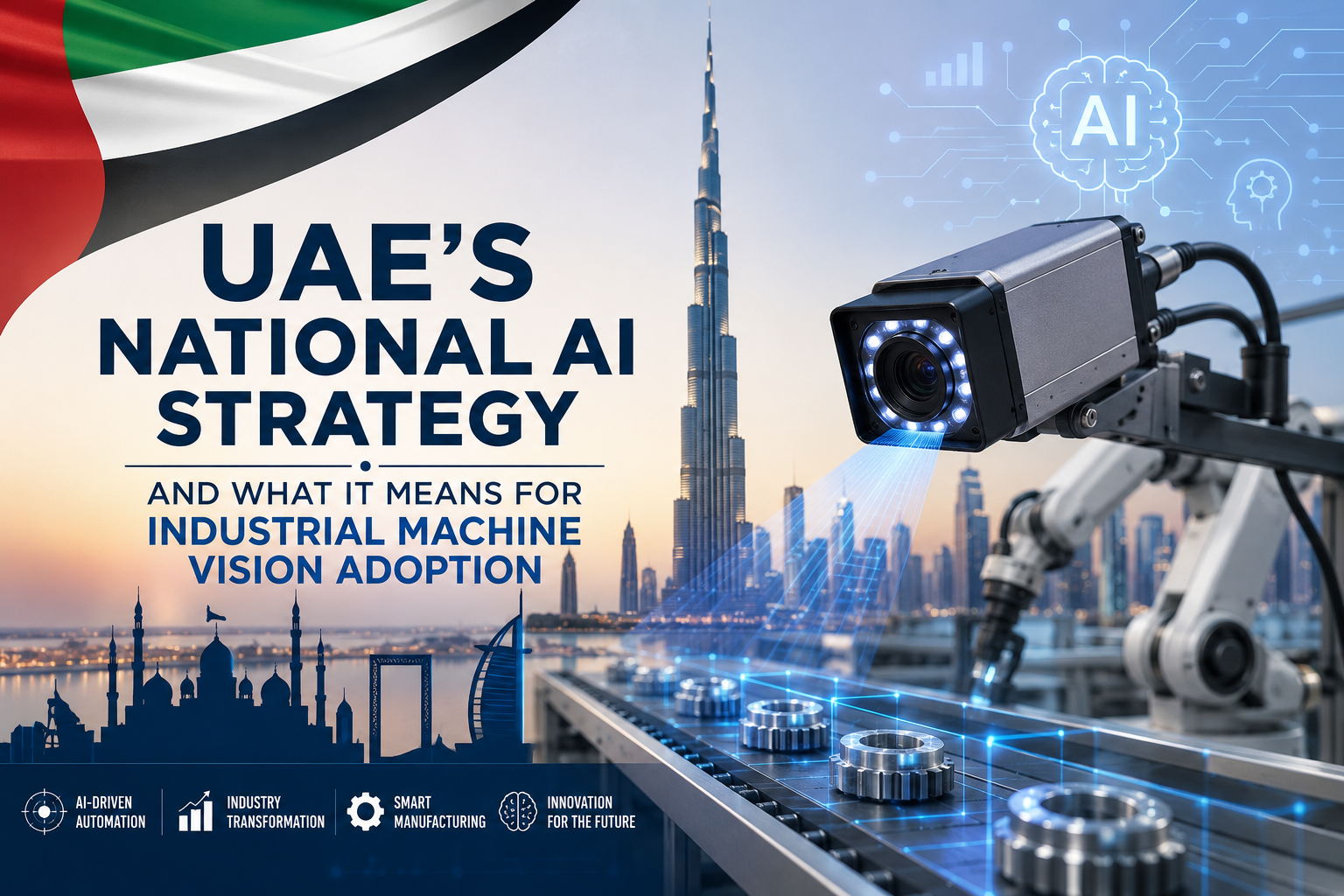
The UAE is the global leader in artificial intelligence through its ambitious national AI strategy. This aims to make the UAE one of the world’s most AI-ready nations. This strategy mainly transforms all UAE industries, such as manufacturing, logistics, healthcare, education, and infrastructure. AI strategy is especially designed to boost economic growth, reduce manual errors, and improve efficiency across industries.
AI strategy for industrial machine vision improves operational efficiency. This is not just about upgrading traditional machinery; it completely transforms your industrial operations and manages them perfectly. In this detailed article, we will provide you with all the information about why AI matters, how it encourages machine vision, the benefits and why Unseen Era is the leading AI smart solution supplier.
The UAE Artificial Intelligence Market size was valued at USD 3.47 billion in 2023, and it is projected to reach a CAGR of 43.9% between 2024 and 2030, according to Grand View Research.
Table of Contents
Why Does AI Matter for the UAE’s Industrial Growth?
The UAE is well known for its crude oil resources, but this is changing quickly. AI changes this central role, and the government mainly focuses on diversification. Most of the industries are now operating smarter with AI technology, not just harder. Here’s how AI is helping industrial growth:
- AI systems eliminate manual errors that slow down production & reduce costs.
- A smart AI system predicts machinery failure, which helps reduce downtime.
- It supports production quality throughout automation
- It speeds up the manufacturing process and helps every industry make better data-driven decisions.
In short, AI is helping industries to work smarter, faster, by taking less time, less waste and fewer errors.
What Is The Industrial Machine Vision System?
Let’s understand it with an example: AI is like our mind, and a machine vision system is like eyes that use cameras with smart lenses, smart sensors, and intelligent software to see and analyse products during manufacturing. It easily detects defects in verification labels, checks alignments, and even guides robotic systems. This machine vision system easily analyses all production lines and products without getting tired.
Here are some common uses:
- Inspecting product quality
- Scanning barcodes and labels
- Checking assembly accuracy
- Detecting defects in real time
- Automating packaging processes
How Does The UAE’s AI Strategy Encourage Machine Vision Adaptation?
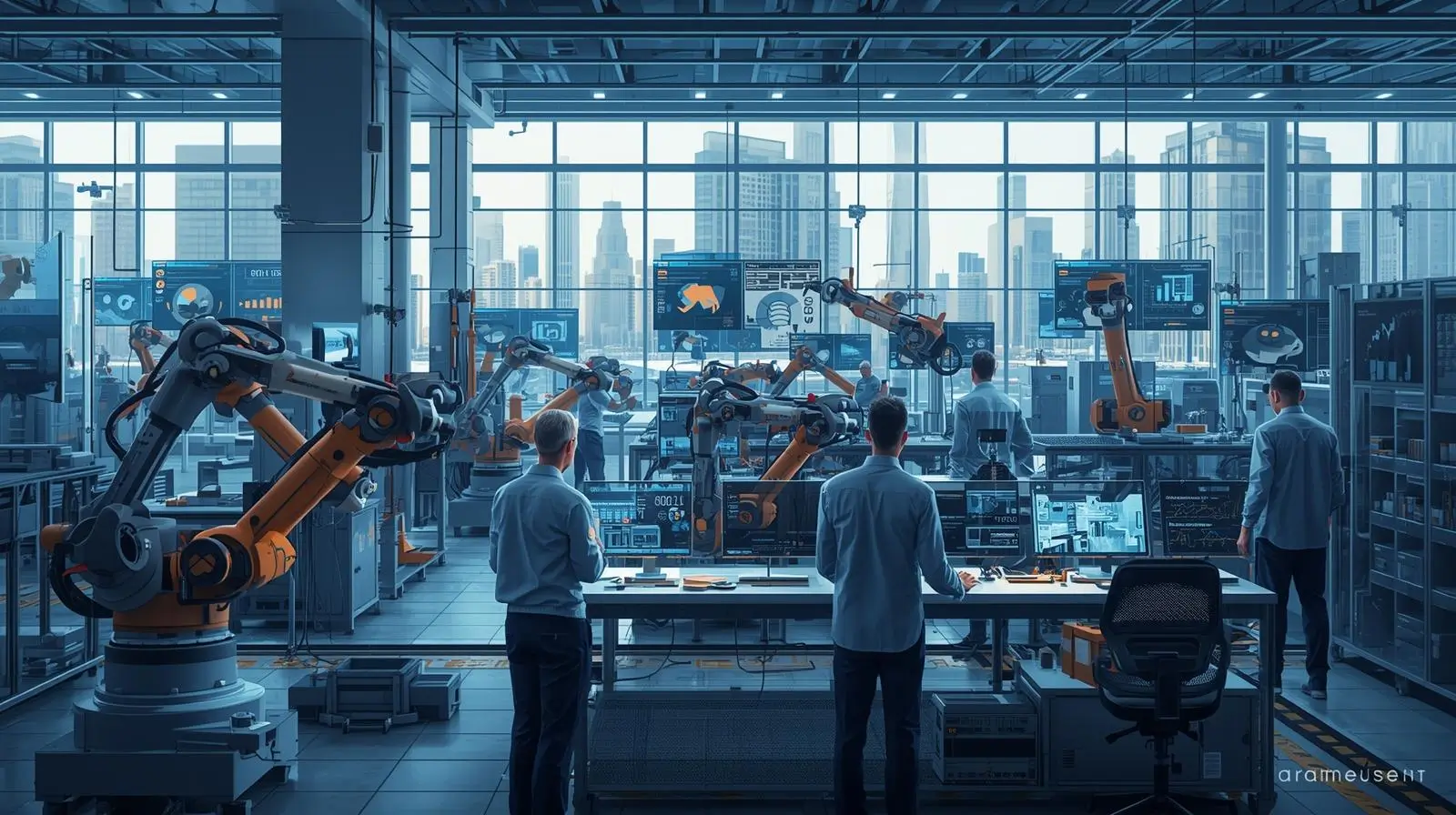
The UAE government also supports smart AI industrial automation techniques that create the right environment for it to thrive. Here are some impacts of the machine vision:
- The government organises innovative programs for industrialists, so they adopt AI technologies that work smartly without bearing the full burden alone.
- With the development of Industry 4.0, many companies are being encouraged to implement automation into their processes. Machine vision represents a significant part of this transition.
- The UAE is making significant developments in various technological advancements (including Cloud Computing and Internet of Things) to provide a strong backbone to facilitate the effective and scalable application of Machine Vision.
- AI-based systems will contribute to a reduction in waste and energy consumption, which aligns well with the UAE’s long-term sustainability plans.
What Are The Key Benefits Of Machine Vision For UAE industries?
Adopting the AI-based machine vision system is not just about keeping up with trends. Smart AI machine vision system delivers you real-time & measurable benefits.
- It supports better quality control because the machine vision system detects defects that humans might miss, ensuring consistent product quality every time.
- Faster production, which allows your production lines to work faster without compromising product quality every time.
- This is the one-time investment for your industry, and it lowers the costs over time by reducing errors and raw material wastage.
- Smart AI systems come with industrial safety sensors that reduce risky environments and create a safe workplace.
- A smart AI system not only corrects your industrial operations, but it also collects data and uses it for improvement & efficiency.
What Are The Challenges The Industries Face In Adopting Machine Vision?
As you know, everything comes with its perks and challenges. Some of the industrialists face challenges in adopting smart industrial machine vision:
- High upfront investment
- Difficulty integrating with existing systems
- Lack of skilled professionals
- Managing large volumes of data
- Need for customised solutions
Why Is the Unseen Era The Trusted Partner For Machine Vision Systems?
When you are an industrialist who is looking for a smart vision system for your manufacturing, textile, automotive and every type of industry. So choosing a reliable industrial automation partner means partnering with a reliable & long term smooth industrial operations. Unseen Era is the smarter operation for choosing the right solution that provides you with smart industrial automation sensors, which mainly focuses on creating solutions that match real business needs.
- Vision systems using artificial intelligence are created with speed and accuracy in mind.
- Custom-designed solutions applicable to the industry
- Dependable inspection and scanning of barcodes via scanning technologies
- Seamless integration within current production systems
- Continuity of support over the lifetime of our solutions

People Also Ask About Uae’s National AI Strategy And What It Means For Industrial Machine Vision Adoption
Q.1 How does AI contribute to reducing downtime in industries?
A: An AI machine vision system reduces industrial downtime because it analyses machine behaviour and detects major machine issues early before they become failures. It helps you to schedule maintenance, identify faults, and stop production unexpectedly.
Q.2 What types of industries use a real-time inspection system in UAE factories?
A: Yes, the real-time inspection system is widely used in various industries such as manufacturing, oil and gas, automotive, food and beverage, pharmaceuticals, logistics, and construction. It is best for ensuring quality, safety, and efficiency.
Q.3 What certification should I check before choosing a machine vision partner?
A: Before choosing the right machine vision partner, you need to check the relevance of the industry, products, certifications like ISO 9001, ISO/IEC 27001 and ensure it meets every specific industry in the UAE and local regulatory approvals.
Q.4 How does AI improve traceability in production lines?
A: Yes, AI improves traceability in the production line because it can easily track all industrial machinery through every stage of production. It easily detects and records defects, processing conditions, and movement in real time, which makes it easier to track issues accurately.
Q.5 Does an AI machine vision system work with a traditional system?
A: Yes, a smart machine vision system works with traditional machinery systems that easily integrate with existing PLCs, cameras, and production lines. It adds smarter detection,
Q.6 What are the machine vision defects detected in the UAE industries?
A: The machine vision system detects the surface scratches, cracks, misalignment, missing components, incorrect labelling, product alignment and dimension variations of the manufactured products.