
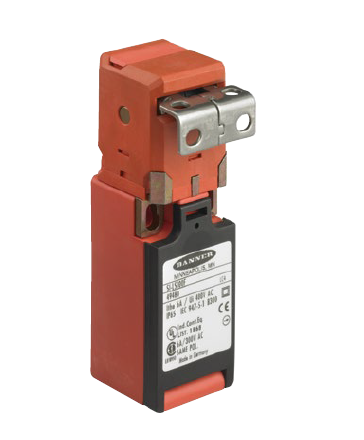
An industrial safety interlock switch is a safety device used to ensure that access to movable physical guard (door, gate, cover etc.) is restricted and the hazardous machine is not able to run when the physical guard is not in the safe position, which is when the physical guard is closed. The ultra-compact design can be used with any kind of door and can be installed anywhere. The company also provides a wide range of effective industrial safety products like Safety Curtains, Two-hand controller, Safety Switch – RFID-based, and Rope-Pull Switch.
What is a Safety Interlock Switch?
Safety interlock switches are used to check that a machine guard, door, or panel is closed. By preventing potentially hazardous machines from starting, or stopping them when safety enclosures are open, the operator is shielded from hazards such as moving parts, electricity, and high temperatures. Keys and coded actuators allow the use of anti-tamper devices, and are certified to a number of standards, so are ideal for incorporating into machine development and adhering to international machine safety regulations.
How do Safety Interlock Switch Work?
A safety interlock switch will be made up of two main parts, the sensor and the actuator. The sensor is fixed to the machine, and the actuator to the sliding door or guard. When the guard is closed the actuator connects with the sensor thereby making the electrical circuit live and operating the machine.
When the guard is opened the actuator disconnects from the sensor. The electrical circuit is broken, and the stop signal is passed to the machine. This prevents the machine from being started when someone requires it to gain access to dangerous areas.
Types of Safety Interlock Switches
The main types of safety interlock switches are:
Mechanical Safety Switches
Operation: Mechanical switches rely on a physical actuator (such as a key, tongue, or plunger) connected to a safety door. The physical removal of the actuator, upon the opening of a door, directly forces the opening of the switch contacts and an interruption to the machine’s circuit.
Use: Best used for heavy-duty industrial doors that undergo vibration and for environments where a direct, physical disconnect is essential.
Guard Locking Switches
Operation: A subset of mechanical switches that physically lock a door shut until such time as the machine’s motion is terminated. The locking mechanism, a solenoid, is designed to release and unlatch the door automatically once motion has ceased. They are available in two formats: Power-to-Unlock, which is failsafe (unlock upon loss of power), or Power-to-Lock.
Use: Used for any equipment with high inertia parts, such as saws or heavy centrifuges, that will continue to run when the machine power is disconnected.
Non-Contact Safety Switches (Magnetic)
Operation: Non-contact safety switches employ a sensor head paired with a magnet actuator. The magnet head is typically mounted on a safety door, and the sensor head is mounted on a stationary frame. When the door is closed, the magnet head passes over the sensor head, and the machine may operate. When the door is opened, the magnet head moves away from the sensor head, breaking the magnetic field, which causes internal reed switches within the sensor head to open.
Use: Good for doors/guards that may be subjected to misalignment or for guards that may get banged around, are dirty, or are subject to frequent wear due to constant use.
RFID (Radio-Frequency Identification) Switches
Operation: Non-contact switches utilize an RFID sensor that reads a uniquely coded transponder on the door. Only if that particular code is read will the switch close, allowing the circuit to be completed. Attempting to “fool” a non-contact switch with a simple magnet or a generic replacement actuator will not achieve the desired outcome.
Use: Suitable for environments demanding a high level of tamper-resistance, excellent sealing (against dirt or liquid), and maximum safety.
Applications of Safety Interlock Switches
Machine Tools (CNC, Lathes, Mills): Keep workers away from hazardous cutting tools, spindles, and moving machine parts. These switches guarantee that the machine cannot be turned on while the safety enclosure door is not fully closed and locked.
Industrial Robotics: Keep people out of automated work cells and robotic enclosures. The interlock would immediately kill the power if a safety fence or door is compromised, so as not to allow serious injury.
Packaging & Processing Equipment: Keep moving belts, blades, and filling mechanisms at bay. Switches with solenoid locks are typically found on these doors to keep the door locked until all of the fast-moving components on the machinery have stopped.
Material Lifts & Conveyors: Vertical reciprocating lifts, freight elevators, and industrial conveyor lines would be kept at bay when the access doors are unlatched. This would keep workers out of harm’s way and away from moving equipment.
Electrical Switchgear: This switch would guarantee against the improper activation of high-voltage systems. Mechanical and electrical interlocks would guarantee that proper operating procedures are followed in order to keep users safe when performing maintenance on high-voltage equipment.
Frequently Asked Questions (FAQs) for Safety Interlock Switches
- What are Safety Interlock Switches?
A safety interlock switch is a device that prevents a machine or piece of equipment from operating when a guard, door, or cover is open or removed, to help reduce workplace accidents and ensure that machines are compliant with industrial safety regulations.
- Where are safety interlock switches commonly used?
Safety interlock switches are found in packaging machines, industrial automated machinery, robots, conveyors, manufacturing plant safety controls, elevator controls, and food processing equipment, and wherever operator safety is a concern.
- How does a safety interlock switch work?
A safety interlock switch monitors whether a machine guard or door is closed. If it is not, the switch will automatically shut off the machinery to reduce the likelihood of injury or equipment damage.
- What are the different types of safety interlock switches?
Safety interlock switches may be of several types. Generally, they are: mechanical interlock switches, magnetic safety switches, RFID safety switches, tongue-operated interlock switches, and solenoid locking interlock switches. All are designed to be used under specific circumstances where certain safety is needed and with specific machinery.
- Why are safety interlock switches important in industrial safety?
Safety interlock switches ensure operators aren’t injured working with dangerous machinery, decrease equipment downtime, help prevent accidents, and ensure that companies are following ISO and OSHA safety standards.
- How do I choose the right safety interlock switch?
To find the correct safety interlock switch, know what kind of machinery it will be used for, what level of safety will be needed, whether a certain level of heat, moisture, or dust will be in the environment where the machine is located, what kind of lock needs to be applied to the guard, and what safety standard should be followed. Speak to an industrial safety specialist to know for sure what kind of safety interlock switch should be used for a particular application.
- Are safety interlock switches easy to install and maintain?
Most safety interlock switches are low maintenance and have simple installation procedures, so they are easy to use, while requiring inspection and cleaning over time to maintain effectiveness.