
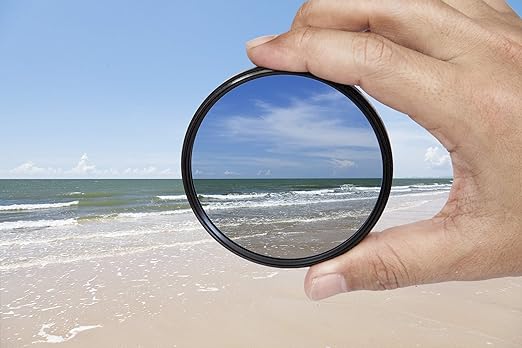
What Are Polarizing Filters?
Unseen Era manufactures special optical components called polarizing filters that enhance the definition of images by eliminating unwanted reflections and reducing glare on the camera sensor. Our polarizing filters are designed to meet the requirements of industrial imaging, machine vision, and photographic applications without sacrificing performance.
These filters work on the principle of selectively blocking polarized light waves and allowing only useful light waves onto the camera sensor. The end result is sharper, clearer, and more accurate images—a necessity in environments with high levels of reflected light or glare such as glass, water, and polished metal.
Benefits of using polarizing filters include:
Reduce Glare and Reflections
By eliminating glare from reflective surfaces, polarizing filters can help to reduce the amount of light scattering in an industrial application. This results in fewer visual obstructions during inspections, which helps to improve the accuracy of inspection results and create a reliable image.
Improve Image Clarity and Contrast
By eliminating excessive scattered light, polarizing filters improve contrast as well as sharpness of the image. By utilizing these enhancements, imaging systems will have the ability to resolve small details, creating improvements in the capabilities of the quality assurance process.
Enhance Color Accuracy
By utilizing polarizing filters, the colors of the captured images will provide a more vivid and accurate representation of the real colors of the objects. This is essential in industries where the ability to differentiate between colors is critical, such as food packaging, food inspection, and electronics.
Applications of Polarizing Filters Across Industries
Polarizing filters from Unseen Era have a varied application across many sectors. In manufacturing, they can identify defects on reflective materials. The automotive sector uses them to prevent glare from painted surfaces during inspections. The electronics sector uses them to enhance the visibility of fine detail on parts.
They are also an effective optical device for many imaging systems designed to be used in research, automation, and photographic settings. When tested under both indoor and outdoor environments, they yield consistent results.
Design, Compatibility, and Ruggedness
Both sizes of the filter (25.5 mm, 30.5 mm, and 35.5 mm) provide compatibility for a wide range of lenses and systems. Unseen Era’s precision-engineered designs guarantee seamless integration into existing imaging systems.
Designed to perform reliably in harsh operating environments, these rugged filters are tested to withstand dust, vibrations, and temperature extremes typically found in manufacturing operations.
Simple to use and high performance
The polarizing filters have a simple screw-on design that allows for fast and easy installation, and an adjustable rotating ring enables the user to make fine adjustments to the level of polarization applied to their image depending on the level of ambient light available.
The polarizing filter may reduce the level of light being transmitted to the camera sensor; however, they significantly enhance clarity, decreases glare, and improves overall contrast, making it an essential component for any imaging system.
Why Choose Polarizing Filters from Unseen Era?
By selecting an Unseen Era polarizing filter, you can expect high levels of precision, stability, and performance. Every filter has been engineered to yield consistent results, to achieve greater operational efficiency, and to create improved imaging accuracy for all applications.
Frequently Asked Questions About Polarizing Filters
Why should I use a polarizing filter?
Using a polarizing filter will limit the amount of glare or reflections coming from sources such as glass, water, and metals. As a result, using a polarizing filter increases clarity, contrast, and color accuracy of images produced by your camera while also producing consistent results when used in industrial settings.
How does a polarizing filter improve photographs?
The polarizing filter will block out unwanted polarized light (polarized light is any light that reflects off of surfaces in one direction), reducing glare, reflections, and haze. Consequently, you end up with sharper images, improved contrast, and more vivid colors—allowing you to capture very fine details that may otherwise be difficult to photograph without it.
Can I use a polarizing filter in an industrial setting?
All of Unseen’s polarizing filters are specifically designed for industrial applications (i.e., manufacturing, machine vision systems, and inspection), eliminating any form of reflective interference, thereby increasing accuracy and overall performance in those applications.
Do polarizing filters reduce the amount of light that my camera lens receives?
Technically, yes, a polarizing filter will reduce the light transmission; however, the benefit of reducing glare and increasing clarity far outweighs this minor concern, especially in situations where you are shooting under controlled lighting conditions or when you’re engaged in precision image-making tasks.