

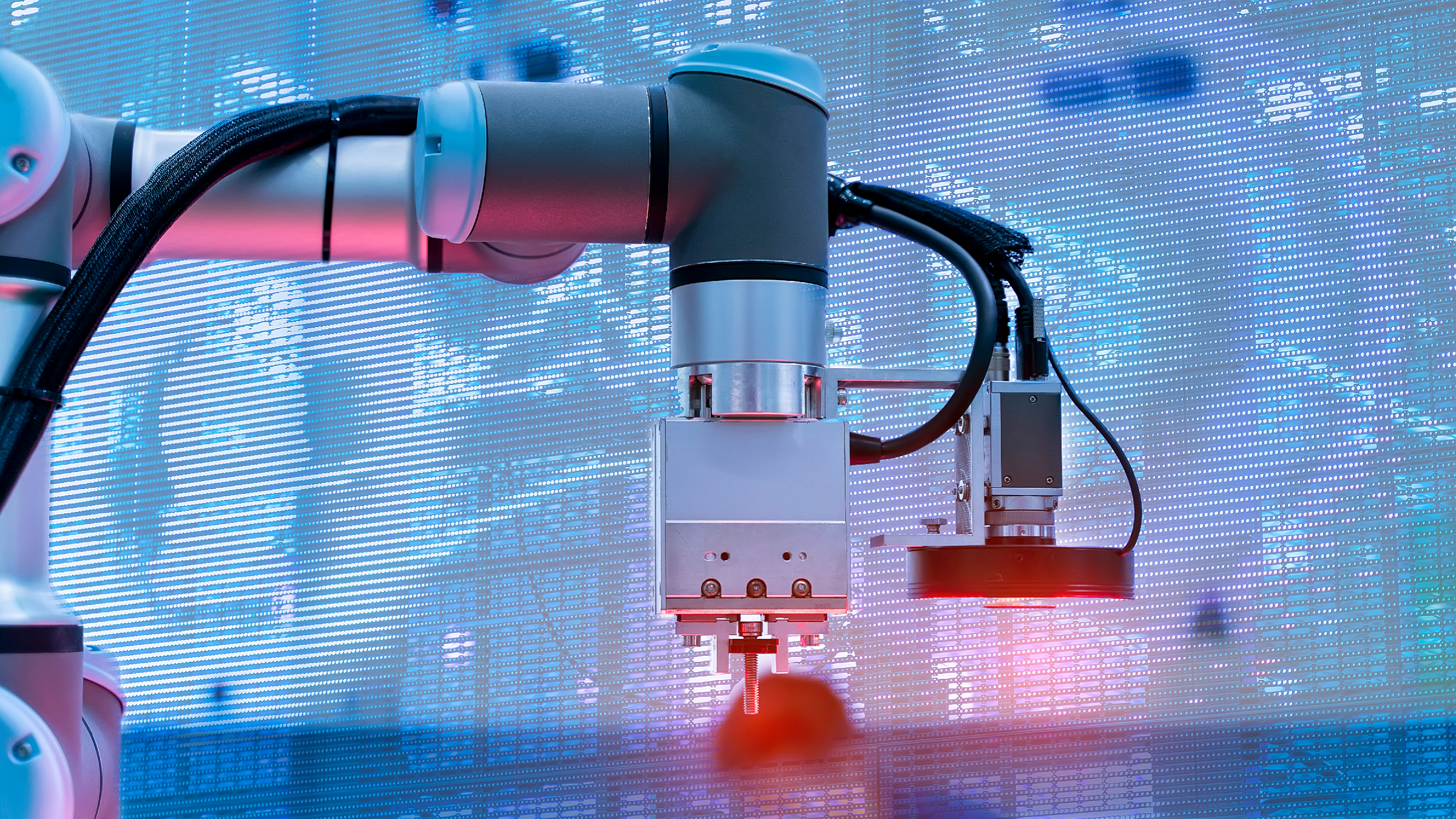
How 3D Vision Cameras Are Transforming Quality Control: We are officially in the Unseen Era — a decades-long time of digital transformation, but also an age where machines are seeing, analyzing, and making decisions with astonishing precision. This transformation is redefining quality control in ways unimaginable a decade ago for manufacturers and industrial plants.
Central to this reinvention are 3D vision cameras — smart sensors that not only record images but also perceive depth, structure, and dimension.
And companies like the UAE-based automation systems provider Unseen Era seek to bring industries into this next generation of precision manufacturing.
But what do 3D vision cameras mean for quality control – and how are the companies that invest in them getting ahead, smarter, and with better efficiency?
Table of Contents
From Manual To Intelligent Vision
Quality control relied heavily on manual examination for many years. Workers of skill would visually examine the product for defects, misalignment, or dimensional issues. As much as human knowledge is helpful, there are limitations:
- Fatigue over long shifts
- Inconsistent accuracy
- Slower inspection speeds
- Difficulty detecting microscopic defects
Next came 2D machine vision systems. They got better at consistency and speed, but there was still no depth perception at this point. They could sense surface imperfections but were weak on complex geometry and dimensional tolerance.
Now, 3D vision cameras are closing those gaps — adding intelligence, perception, and automation to quality control.
Here is where the Unseen Era truly takes off.
What Are Those 3D Vision Cameras?
Unlike regular cameras that take two-dimensional pictures, 3D vision cameras provide depth measurements as the image is captured. They survey elevations, volumes, shapes, and surface irregularities. Using technologies such as:
- Structured light
- Laser triangulation
- Stereo vision
- Time-of-flight (ToF)
Quality Control Is All About The Benjamins (Depth Perception)
Think about reading a mechanical component with grooves, curvatures and internal counter-forms.
A 2D camera can verify that the surface is smooth. But it cannot reliably measure:
- Subtle warping
- Height inconsistencies
- Depth variations
- Micro misalignments
The problems are immediately detected by a 3D vision system.
In industries such as automotive, aerospace, electronics and pharmaceuticals — where tolerances are tight and precision is not an option — this depth awareness keeps mistakes from becoming expensive.
- Unmatched Dimensional Accuracy
Accurate measurement is one of the largest 3D vision cameras.
They can accurately calculate:
- Length and width
- Height and depth
- Volume
- Surface flatness
- Hole dimensions
- Alignment tolerances
- All without touching the product.
This no-contact accuracy is what guarantees that parts will fit together seamlessly on the production line. Still, even minute variances will not go unnoticed until they balloon into costly manufacturing issues.
When automation game changers from the likes of Unseen Era adopt these technologies, makers and manufacturers in the UAE and beyond meet new production benchmarks.
- Real-Time Inspection at Production Speed
For today’s manufacturers, speed and precision hold equal value.
Manual inspection slows production. A few angles or changes might even be necessary for conventional vision systems.
3D vision cam sensors capture the full geometry at once. That means:
- Real-time pass/fail decisions
- Continuous inspection
- No production bottlenecks
The result? Faster output without compromising quality.
This is particularly useful in high-volume sectors where time is essential.
- Reduced Human Error
Problem-solving is what humans do best, but attention and accuracy can wane with the monotony of inspection.
3D vision systems offer reliable operation around the clock. They hold all products to the same standard — no tiredness, no forgetfulness.
This technology makes workers more, not less, productive. Teams are free to give attention to process control, system efficiencies, and strategic work while automated solutions perform repetitive checks.
That’s the true spirit of Unseen Era: humans and intelligent automation alongside one another.
- Early Detection of Complex Defects
Some defects are nearly invisible:
- Hairline cracks
- Slight deformations
- Assembly misalignment
- Warping due to temperature
3D vision cameras read geometry, not just surface color. That’s for them to be able to notice minor structural problems, and we receive products from that.
For example:
- In auto body shops, accidents occur because of misalignment.
- Irregular coplanarity of solder joints is problematic in electronics.
- Failure to maintain consistent packaging in pharmaceuticals can result in poor follow-on compliance.
- The earlier a defect is caught, the less time, cost, and reputation at risk.
- Data-Driven Quality Intelligence
Data is power in today’s industrial landscape.
3D vision systems produce qualitative inspection information, which may be:
- Stored for compliance and traceability
- Analyzed for defect trends
- Used for predictive maintenance
- Integrated into smart factory systems
Instead of being reactive to quality defects, manufacturers have the possibility to improve their processes.
Where automation partners such as Unseen Era integrate vision systems into larger automation frameworks, businesses obtain more than just inspection tools — they purchase intelligent production landscapes.
- Collaboration with Robotics/Artificial Intelligence
Modern factories are interconnected environments.
3D vision cameras can be easily integrated with the following:
- Robotic arms
- Conveyor systems
- AI analytics software
- Manufacturing execution systems (MES)
If a 3D camera detects a dimensional defect, for instance, the line of robots can be automatically purged.
When AI, these systems are made even smarter, learning from past defects and enabling increased accuracy of inspection.
So this is quality control, sort of becoming adaptive intelligence.
- Non-Contact and Safe Inspectio
Certain products are:
- Fragile
- Extremely hot
- Hazardous
- Highly sensitive
Conventional measurement instruments can destroy or change them.
3D vision cameras allow for touchless, safe inspection of the product and the employee.
They are well-suited for use in cutting-edge manufacturing facilities throughout the UAE and worldwide.
- Long-Term Cost Savings
Although it is expensive to deploy 3D vision systems, the payoff is enormous.
Consider the cost of:
- Product recalls
- Rework
- Customer dissatisfaction
- Warranty claims
- Production downtime
Businesses can save on future operating expenses by identifying issues early and eliminating wastage.
Unseen Era clients enjoy bespoke automation approaches that ensure the highest return, along with future-powered production lines.

Real-World Impact Across Industries
3D Vision Cameras Are Changing Quality Control in the:
- Automotive: For accuracy, in weld checking, part alignment, and dimensions.
- Electronics: Checking of circuit board mounting and solder joint quality.
- Aerospace: Verification of structural tolerances and high-accuracy parts.
- Pharmaceuticals: Checking the intactness of the packing and consistency of the product.
In all of these cases, precision is profit.
The future is not only inspection, but it’s also intelligent production.
As 3D vision technology evolves, we see:
- Faster data processing
- Higher resolution scanning
- Greater AI integration
- Fully autonomous quality correction systems
Factories will go from finding defects to preventing them on their own.
Companies such as Unseen Era are at the forefront of this revolution in the UAE, guiding manufacturers into a smarter, more efficient tomorrow.
Frequently Asked Questions for 3D Vision Cameras are Transforming Quality Control:
Ques. Why are 3D vision cameras better than 2D cameras ?
Ans. 3D vision cameras can record depth and spatial information; therefore, accurate dimension measurement is allowed. Unlike 2D systems , which look at a 1- dimensional flat image, the 3D system sees height variation in addition to misalignment errors and complex geometries much more accurately.
Ques. Can 3D vision cameras be used in high-speed production lines?
Ans. Yes. Today’s 3D vision systems are made for rapid analysis. They check parts immediately without interrupting production, thus they are perfect for high-volume production environments.
Ques. Will 3D vision cameras see tiny defects?
Ans. In high-resolution 3D systems, it can even discover micro-metre-based deviations, depending also on the used configuration and calibration. They are particularly good at catching tiny fissures, defects, or dimensional errors that otherwise could not be known through manual inspection.
Ques. Are there any lighting conditions that 3D vision systems need?
Ans. Structured light or laser-based systems are also available, decreasing reliance on external lighting. But a good setup and calibration are crucial for consistent, accurate inspection results.
Ques. Where do 3D vision cameras fit into automation?
Ans. They integrate with robotics, AI platforms, and manufacturing software. When flaws are detected, automated systems can react immediately — by removing flawed items or making real-time changes in production settings.
Ques. Can 3D vision cameras pay off for mid-market producers?
Ans. Yes. Initial investment costs may be higher, but long-term savings from fewer defects, less waste, and more efficiency typically provide excellent increased ROI.
Ques. Which industries benefit most from 3D vision Quality Control?
Ans. Sectors with a high requirement for tight tolerances, like automotive, aerospace, electronics, pharmaceutical, and precision engineering, can all benefit from the need to ensure accurate dimensional verification.
Ques. How can Unseen Era help companies utilising 3D vision technology?
Ans. Unseen Era specializes in tailored automation solutions and offers customers 3D vision cameras embedded into smart production systems, making them more precise, effective, and operationally sustainable in the Middle East.